

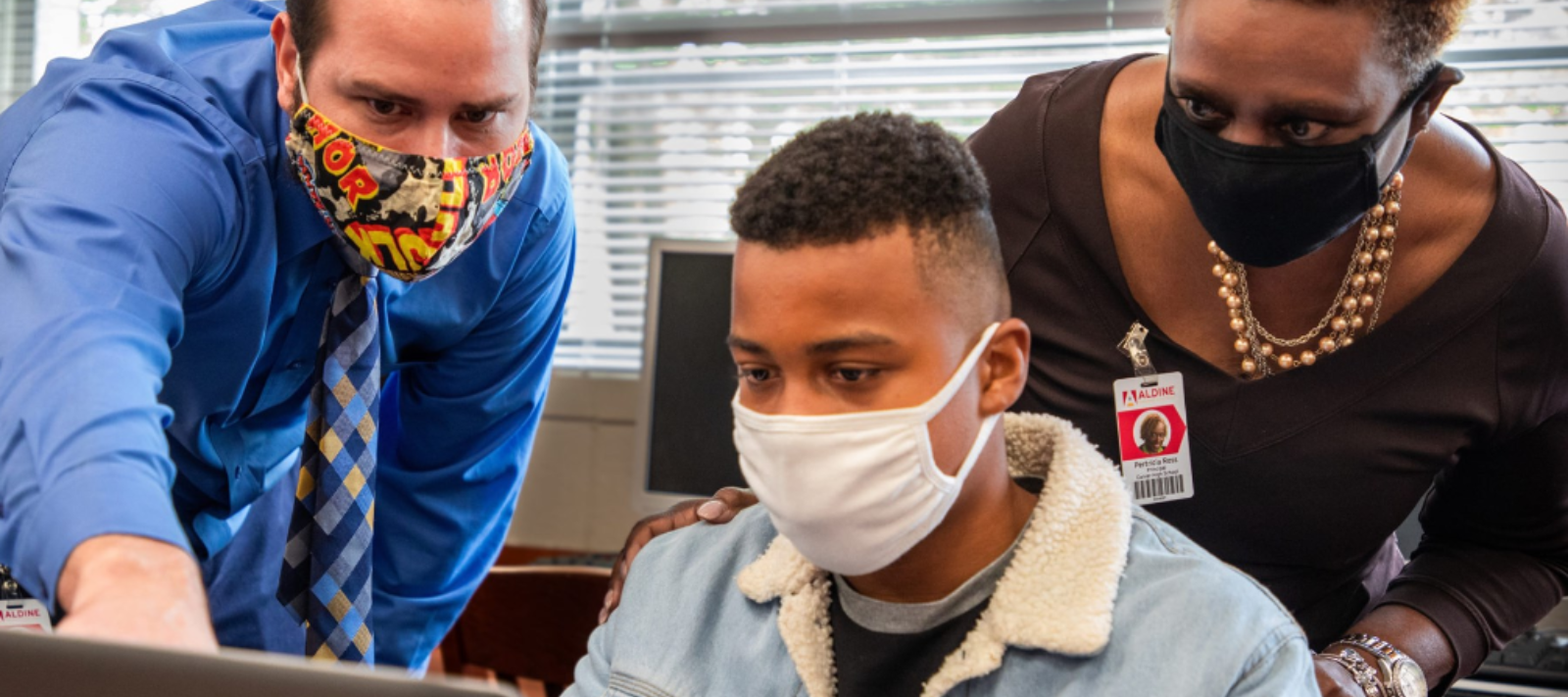
Malden, a city just north of Boston, is a diverse community with many racial and socioeconomic groups. The city’s school system relies on data to understand who is being served well — and who is not. Leaning in to difficult conversations about the data served as a foundation for a broad range of next steps the school and district could take toward ensuring that every student has a high-quality learning experience.
Now more than ever, schools and districts across the country are striving to focus on equity, with the challenging events of 2020 illuminating countless disparities across the country. People of color and lower-income communities have experienced significantly higher rates of Covid-19 infection and mortality, along with job loss, housing instability and more precarious food access.
The impact on students and their education experience is profound. McKinsey & Company predicted that if school closures and hybrid schedules continue throughout this school year, Black students could experience 10.3 months of learning loss and Latinx students 9.2 months — compared with six months of learning loss for white students.
Such disparities are reinvigorating calls for public education to fulfill its central role in advancing racial equity. Racial equity in education means all young people, regardless of race or background, achieve at high levels. That is the ultimate measure of school quality.
Racial equity in education means all young people, regardless of race or background, achieve at high levels. That is the ultimate measure of school quality.
When we see persistent differences in student outcomes based on race and background, this gives us important information; it tells us our schools are falling short — and that we need to do school differently.
As Malden and other thoughtful public districts demonstrate, advancing racial equity takes more than isolated trainings, readings or work by “equity teams.” It takes a commitment to bold thinking about all aspects of school that contribute to school quality.
Advancing racial equity takes more than isolated trainings, readings or work by “equity teams.” It takes a commitment to bold thinking about all aspects of school that contribute to school quality.
This is precisely the work our organizations — the Barr Foundation and Springpoint — have been doing in our support of schools across New England, via the “Engage New England: Doing high school differently” initiative. Since 2017, schools have designed a diverse array of high school models that champion success for all students. This helps us identify four critical elements linking school quality to racial equity.
1. A Mission Rooted in the Belief That All Students Can Achieve at High Levels
Schools that effectively serve all students have a clearly defined mission rooted in an unwavering belief in the potential of all students. The whole school community